![The fact that galaxies rotate faster than expected is a strong indicator that we only see a small fraction of all the matter that exists—the additional mass comes from “dark matter.’’ [Credit: NASA/JPL-Caltech]](https://images.squarespace-cdn.com/content/v1/58a8b368d1758e8411790a59/1660935300650-5P88JPZJW6RXS22SLBRE/galaxy.jpeg)
![The large-scale structure of galaxies across the Universe teaches us about the properties of dark matter. [Image: 2MASS Redshift Survey]](https://images.squarespace-cdn.com/content/v1/58a8b368d1758e8411790a59/1487646981537-QI8WAJWPD29JRVZ2T2U0/jarrett_Fig1+%281%29.jpg)
![The properties of dark matter can affect the dynamics of galaxies like our own, which can be tested with astrophysical observatories such as Gaia. [Image: ESA/Gaia/DPAC; CC BY-SA 3.0 IGO]](https://images.squarespace-cdn.com/content/v1/58a8b368d1758e8411790a59/1660932089535-AKTZP8RYBPU6BQU524O3/gaia.jpg)
![Dark matter can affect the observable properties of small dwarf galaxies that are colliding with the Milky Way. [Credit: NASA/JPL-Caltech/R. Hurt (SSC/Caltech)]](https://images.squarespace-cdn.com/content/v1/58a8b368d1758e8411790a59/1660934041884-LHR33ZQWO0SDNXW16YFT/streams.jpeg)
![Signals of dark matter from annihilations at the centers of galaxies may be hiding in high-energy gamma-rays. [Image: Fermi All-Sky Map]](https://images.squarespace-cdn.com/content/v1/58a8b368d1758e8411790a59/1487647058564-5YGM3ULWTEPC3WTB1932/Fermi_5_year.jpg)
![Simulations of dark matter help us understand its astrophysical distribution in the Milky Way and beyond. [Image: Via Lactea Simulation]](https://images.squarespace-cdn.com/content/v1/58a8b368d1758e8411790a59/1487646487310-LONP15DBIT7HRBAVV9SK/L800kpc_z0_0.jpeg)
![Dark matter may be produced at the Large Hadron Collider and other accelerator experiments. [Image: CERN]](https://images.squarespace-cdn.com/content/v1/58a8b368d1758e8411790a59/1660945397683-FQO57LKG203ES81T4X0E/gammagamma.png)
The fact that galaxies rotate faster than expected is a strong indicator that we only see a small fraction of all the matter that exists—the additional mass comes from “dark matter.’’
[Credit: NASA/JPL-Caltech]
The large-scale structure of galaxies across the Universe teaches us about the properties of dark matter.
[Image: 2MASS Redshift Survey]
The properties of dark matter can affect the dynamics of galaxies like our own, which can be tested with astrophysical observatories such as Gaia.
[Image: ESA/Gaia/DPAC; CC BY-SA 3.0 IGO]
Dark matter can affect the observable properties of small dwarf galaxies that are colliding with the Milky Way.
[Credit: NASA/JPL-Caltech/R. Hurt (SSC/Caltech)]
Signals of dark matter from annihilations at the centers of galaxies may be hiding in high-energy gamma-rays.
[Image: Fermi All-Sky Map]
Simulations of dark matter help us understand its astrophysical distribution in the Milky Way and beyond.
[Image: Via Lactea Simulation]
Dark matter may be produced at the Large Hadron Collider and other accelerator experiments.
[Image: CERN]
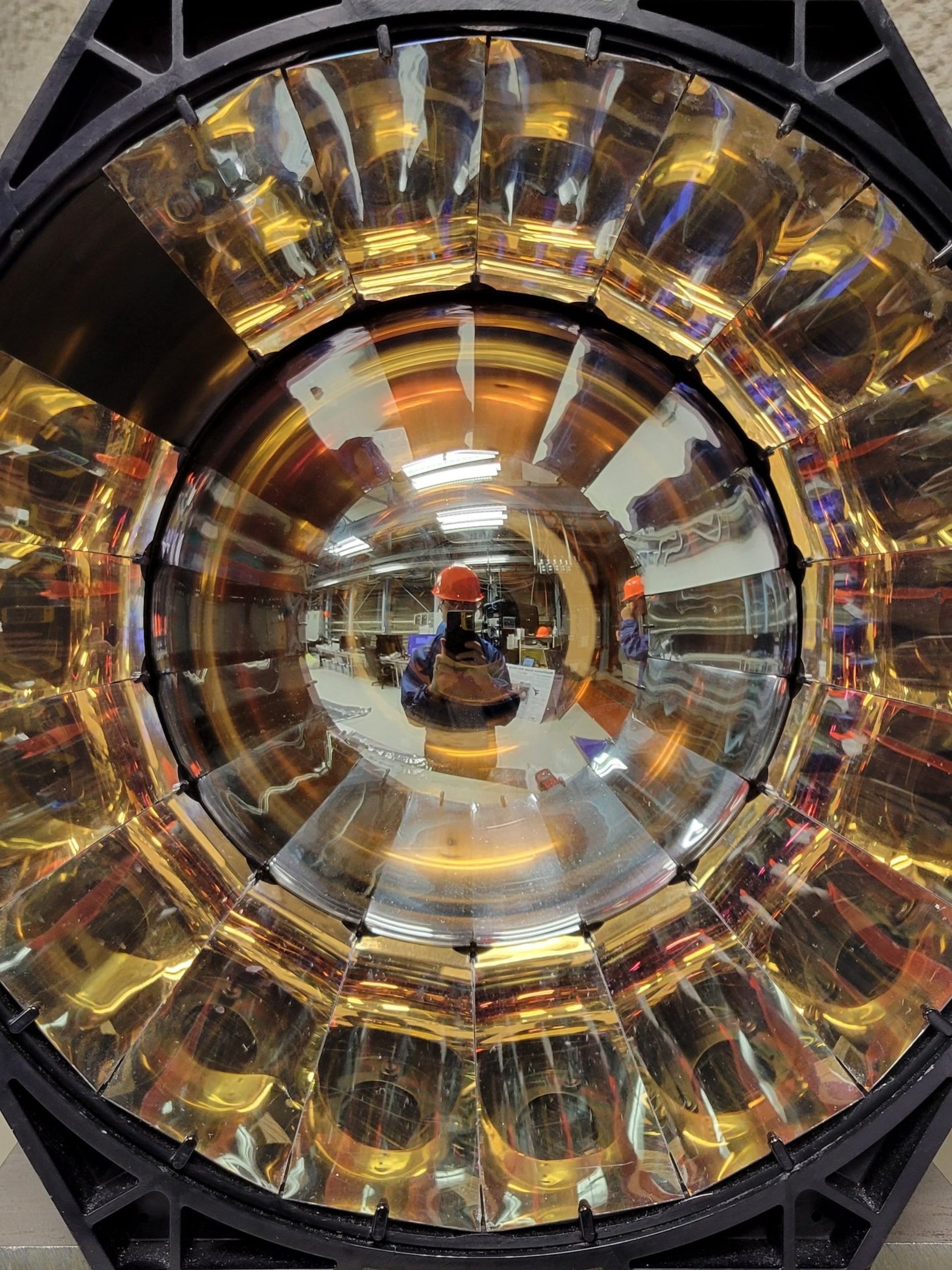
Dark matter signals in experiments can be so weak that they require incredibly sensitive detectors.